The preparation of scientific competencies in various fields of knowledge, and the production of innovative scientific research aims to serve society by providing exemplary education in an intellectually stimulating university environment.
Jobs | Scholarships | Students | Staff | Alumni
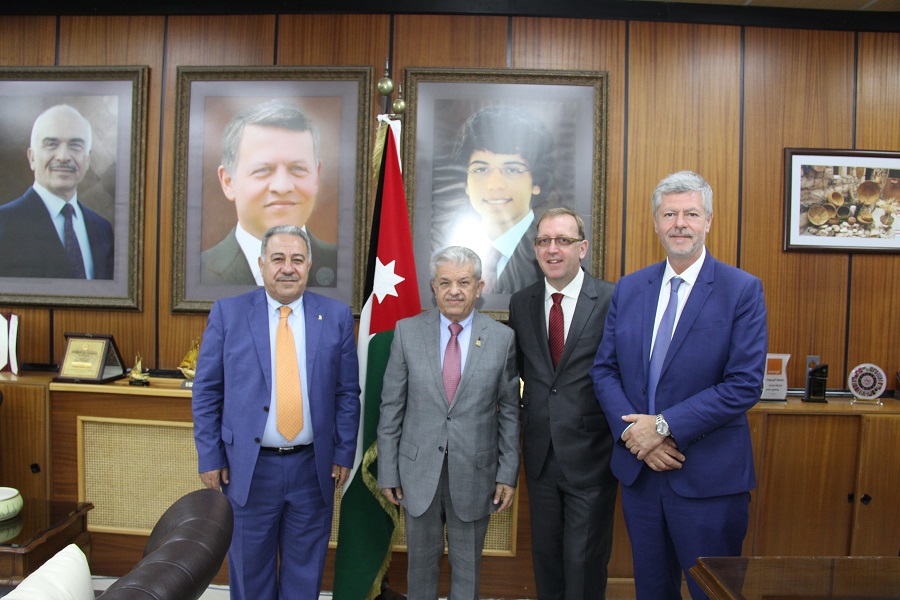
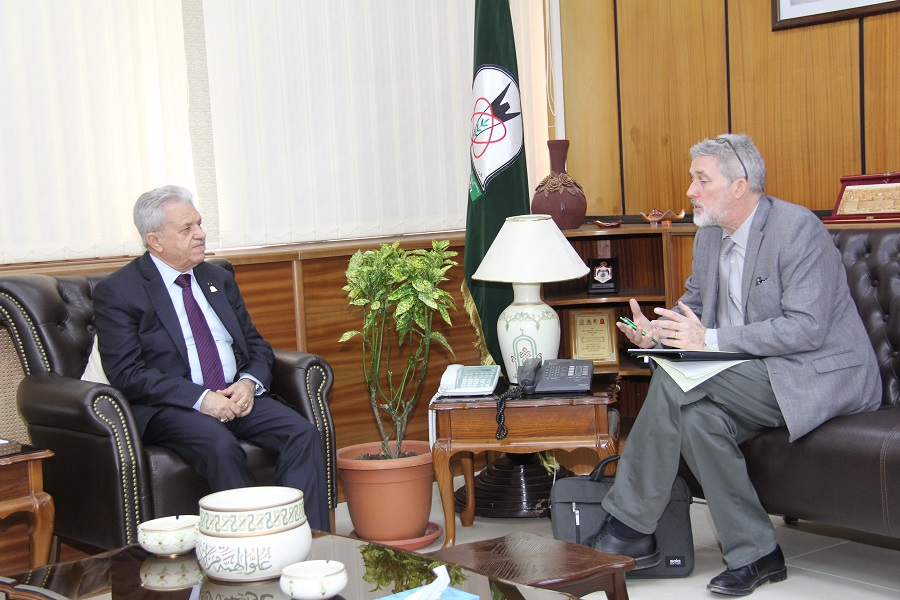
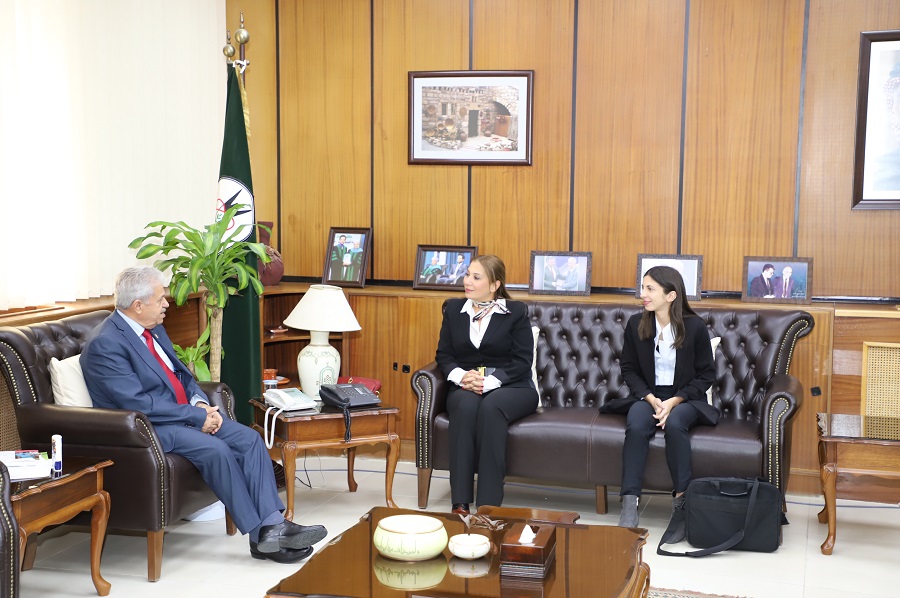
President of YU, Dr. Zeidan Kafafi, met with Dr. Jean-Michel Shapue of the Institute of Research and Graduate studies at the French University of Paris I, and Katrina Clett, attaché of university cooperation at the French Embassy in Amman. Means and ways of academic cooperation between the two sides were discussed.
At the beginning of the meeting, Kafafi pointed out that Yarmouk has a long history of academic cooperation with French educational institutions. He further stressed the importance of activating this cooperation through exchange programs in the framework of the EU-supported Erasmus+ programs. He further pointed out that Yarmouk has already sent 80 students to various EU countries such as Spain and Sweden this semester and invited the French embassy to build bridges of academic and research cooperation between Yarmouk and various French institutions of higher education.
Kafafi confirmed Yarmouk's readiness to renew the memorandum of understanding with the University of Paris I, which provides for joint cooperation in tourism and hotel management, confirming the support of YU's administration to guide specialists from both sides to put forward the idea of Sandwich Degree in hotel management, which is a distinct educational and training opportunity for students of the Faculty of Tourism at the two universities.
For their part, the delegation confirmed the embassy's willingness to enhance cooperation between French universities and Yarmouk in various fields particularly in tourism and French language. They also pointed to the possibility of increasing the number of student visits to French universities through Erasmus+ exchange program, which constitutes an opportunity to enrich their academic and cultural knowledge.
The meeting was attended by the dean of the faculty of tourism and hotels, Dr. Mohammed Al-Shunnaq, director of international relations department, Dr. Mowaffaq Al-Otoom, and director of public relations and media, Mr. Mukhlis Al-Ibbini.
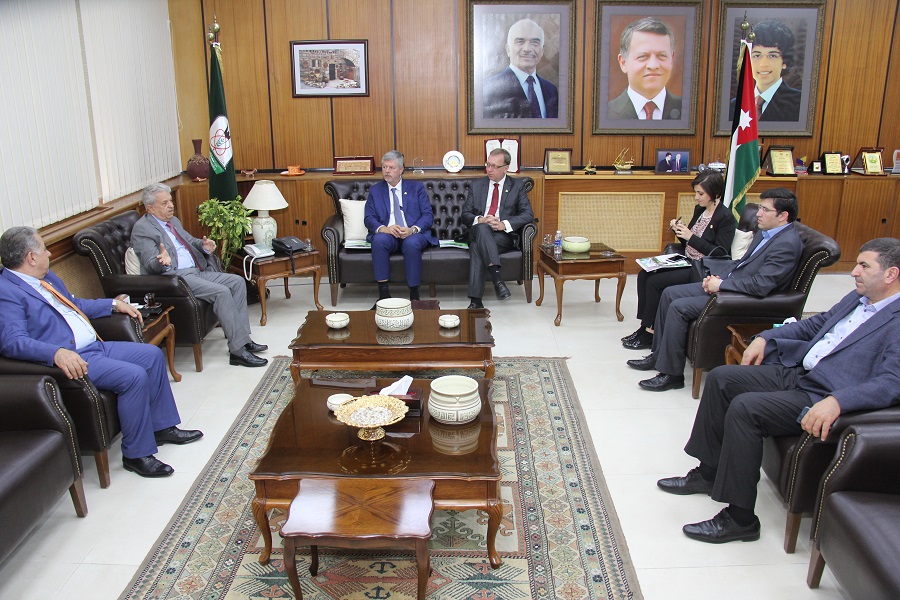

Dr. Zeidan Kafafi, YU president, met with Dr. Michel Mouton, director of the French Institute for Near East Studies in Jordan, Syria, Iraq, Lebanon and Palestine, Dr. Falestin Naili, the Institute's official in Jordan, and Ms. Rawan Al-Homaimat, head of cooperation affairs at the French Embassy. During the meeting, the agreement, which was signed with the German Goethe Institut, the French Institute for the Near East Studies and the French Embassy in Amman was renewed to carry out a project on "Oral History in Jordan".
The agreement stipulates implementing a project on oral history in Jordan, funded by the German-French cultural center, the French Institute and the Goethe-Institut, in cooperation with the University Agency of la Francophonie. The project includes collecting oral testimonies on the First World War period from people who heard stories about it, to be collected by students from Jordanian universities: The University of Jordan, Mutah University, Al Hussein bin Talal University, Yarmouk University and the Jordanian National Library.
The project aims at training students and specialists to research oral history. It also aims at establishing a group of young researchers, creating a sense of importance of cultural heritage among them, and providing them with the tools and expertise required for such kind of research, especially that oral testimonies are main sources of history in Jordan as well as means of documenting and analyzing historical awareness of the social groups that experienced that period.
Under this agreement, students from participating universities are to be trained on oral history research by experts of anthropology and history, through several workshops and training sessions.
The signing of the agreement was attended by the dean of the faculty of Archaeology and Anthropology, Dr. Hani Al-Hayajneh, the director of Al Hussein bin Talal library, Dr. Omar Al Ghoul, the director of public relations and media, Mr. Mukhlis Al-Ibbini, and several faculty members.
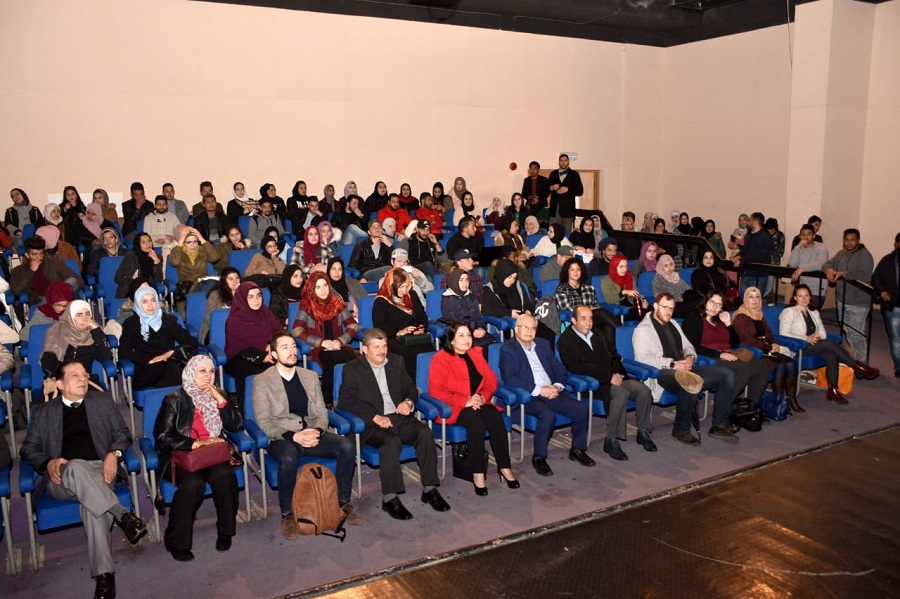
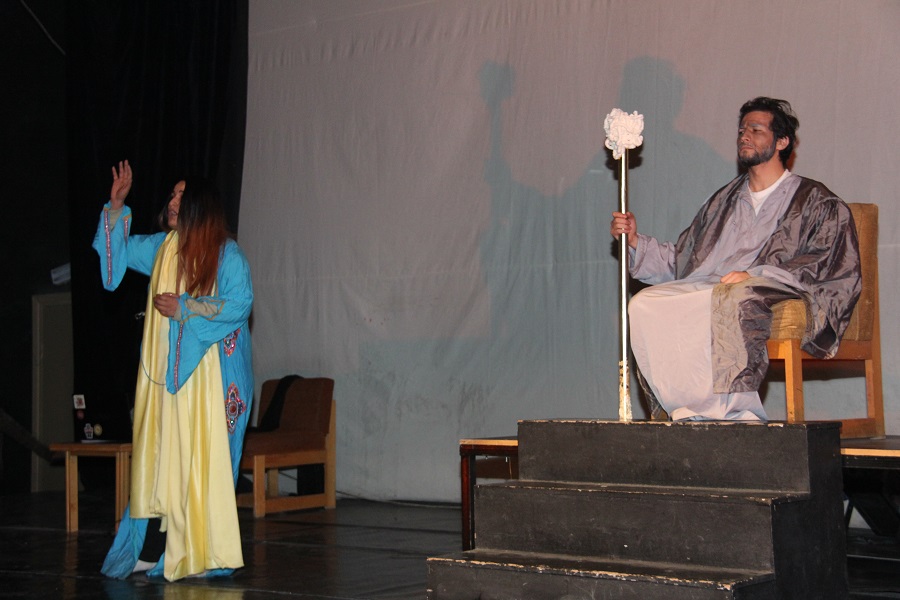
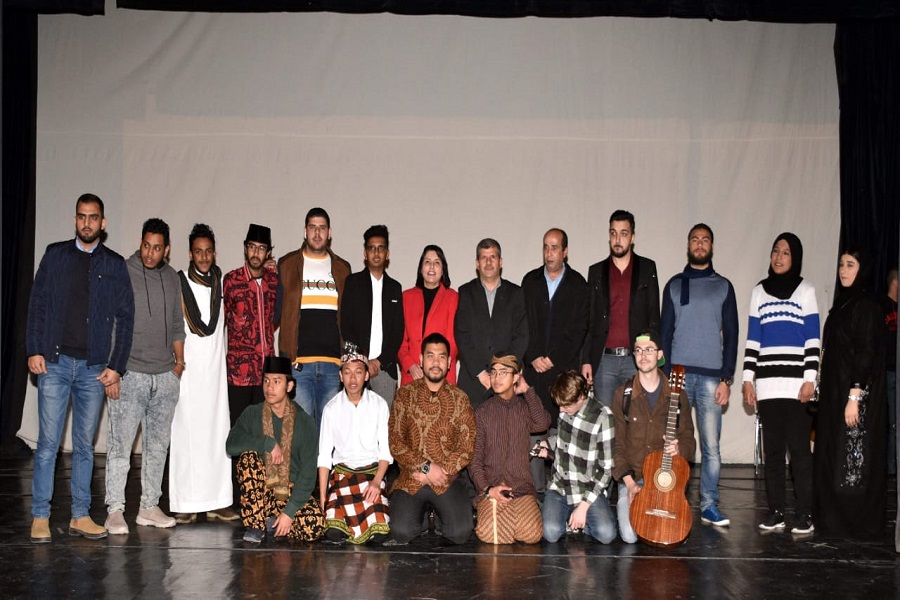
Dr. Amal Nseir, dean of Students' Affairs at YU, sponsored a cultural activity entitled "A Journey around the World", organized by Students’ Care Department at the deanship of Students Affairs, in which Arab and foreign students studying in Yarmouk participated.
The activity was about a flight full of passengers heading to several countries around the world, and the opportunities that passengers have, when landing on each country, to learn about the country’s culture and heritage.
Students from Yemen, Egypt, Syria, Bahrain, Indonesia and the United States of America featured cultural and art performances that included traditional songs, folk dances with traditional costumes, and poems.
Nseir praised the international students’ creativity in transferring their countries’ heritage and culture to Yarmouk students, and stressed their integration with the university community and the importance of fostering their creativity and talents.
The activity was attended by the dean of the Faculty of Fine Arts, Dr. Wael Al Rashdan; assistant dean of Students Affairs, Dr. Mohammed Alawneh; director of Students' Care Department, Mr. Marwan Tayfur; faculty members from the faculty of Fine Arts; officials from the deanship and university students.
It is worth noting that the number of international students at Yarmouk is 2600 from 43 Arab and foreign countries.

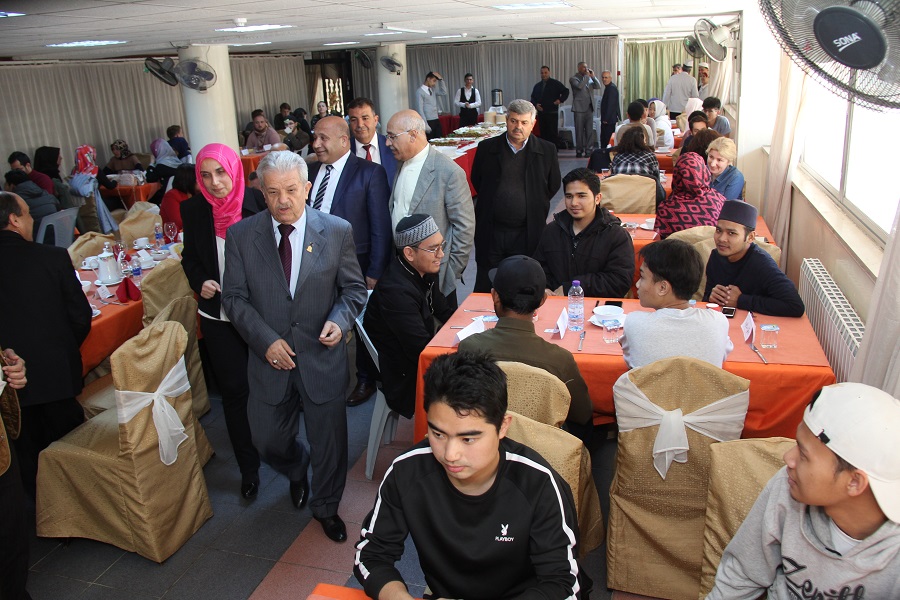
Organized by the Languages Center, president of YU, Dr. Zeidan Kafafi, attended a breakfast banquet with international students who are enrolled at the Arabic language program.
In his speech, Kafafi noted that Yarmouk embraces students from more than 40 Arab and foreign nationalities, stressing that Yarmouk, represented by the languages center, strives to teach them Arabic as well as Jordanian culture and traditions to enable them to learn faster and to be easily integrated with the local community. Kafafi also praised the Languages Centre’s staff for their continous efforts in teaching Arabic.
The director of the center, Dr. Lamia Hammad, for her part, stressed the importance of cultural openness and pointed out that Languages Center always seeks to embody meanings of respect and dialogue among different Islamic and foreign cultures. She further noted that the banquet aimed to integrate their students with other students, strengthen relationships among them, and familiarize them with Jordanian traditional dishes.
Students, for their part, thanked the center’s administration for offering them with a healthy educational environment, and thanked Yarmouk’s administration for organizing extracurricular activities that ensure their involvement in the student’s body.
The breakfast banquet was attended by members of the Council of the Languages Centre, a number of university officials, faculty members and officials of the Centre, and 80 students representing Malaysia, China, Korea, America, Spain, Turkey, Australia, Dagestan, and Greece.


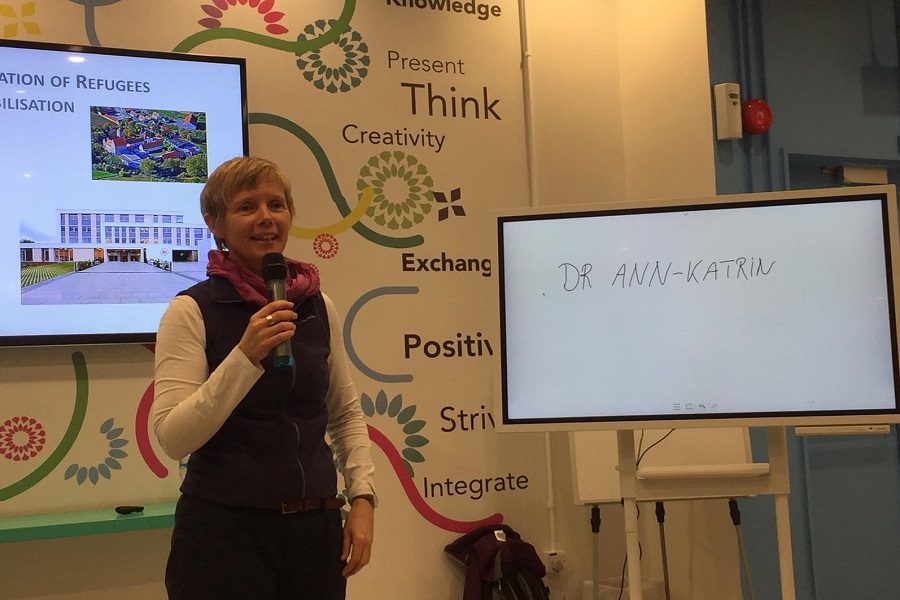
At the invitation of the translation department at YU, Dr. Annett Bochmann from the University of Hildesheim in Germany delivered a lecture on the psychological and social status of refugees and the positive roles of interpreters in mental health sectors.
In her lecture, Bochmann talked about the German experience in hosting refugees and training interpreters to assist during refugee’s psychiatric treatment sessions. Bochmann then trained translation students on the skills that interpreters should acquire for working in such sectors.
At the beginning of the lecture, the head of the department, Dr. Mohammed Obeidat, welcomed the guest, and confirmed that the department has always sought to involve students in various activities and events that improve their translation skills.
Dr. Somaya Al-Qudah, the activity supervisor, pointed out that the department's students need such training since the translator's role is not limited to language skills. She added that interpreting in medical and mental health sectors requires interpreters to receive training in linguistic, cognitive, cultural, psychological and professional domains, considering the continuing need to recruit qualified interpreters to work in international organizations in Jordan.


Dr. Zeidan Kafafi, president of YU, met a delegation from El-Hikam Consultant Center (ECC) in Indonesia, headed by the Director General, Masroohan bin Khatib. The two sides discussed means and ways of cooperation.
During the meeting, Kafafi stressed the keenness of YU to cooperate with various educational institutions around the world, including Islamic countries in East Asia, pointing that YU have signed many cooperation agreements with Indonesian universities in terms of teaching Arabic, Sharia and Islamic studies, which reflects the role of YU in serving Arabic language and in the dissemination of Islamic teachings. He further reviewed the degrees offered by YU in various academic disciplines, and the development that YU have witnessed recently.
Bin Khatib, for his part, praised the academic reputation that YU enjoys in the region, particularly in teaching Arabic to speakers of other languages, and in Islamic studies, noting that the center seeks to benefit from Yarmouk experiences and competencies, and hoping to serve as a link between Yarmouk and various Indonesian universities in students and staff exchange.
The meeting was attended by several officials from both sides.

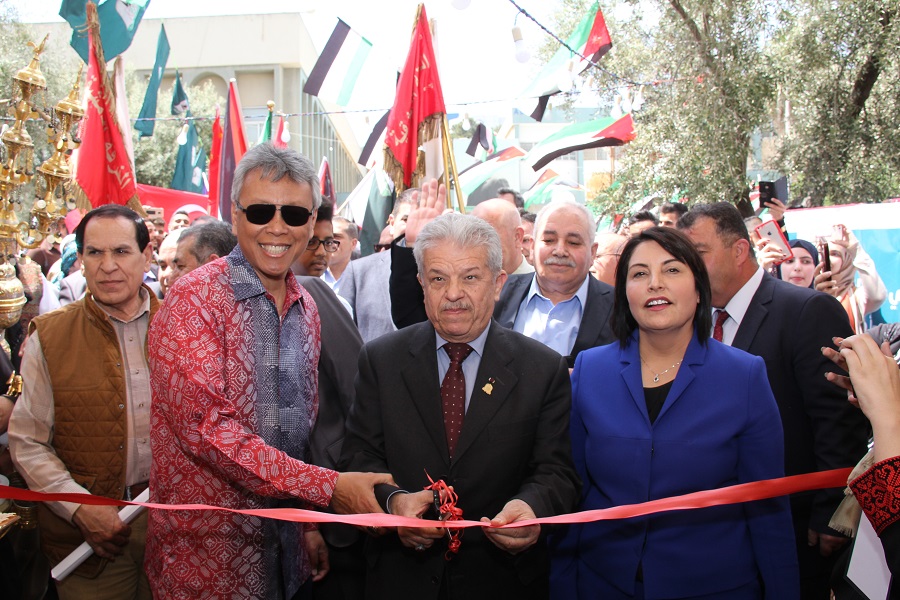
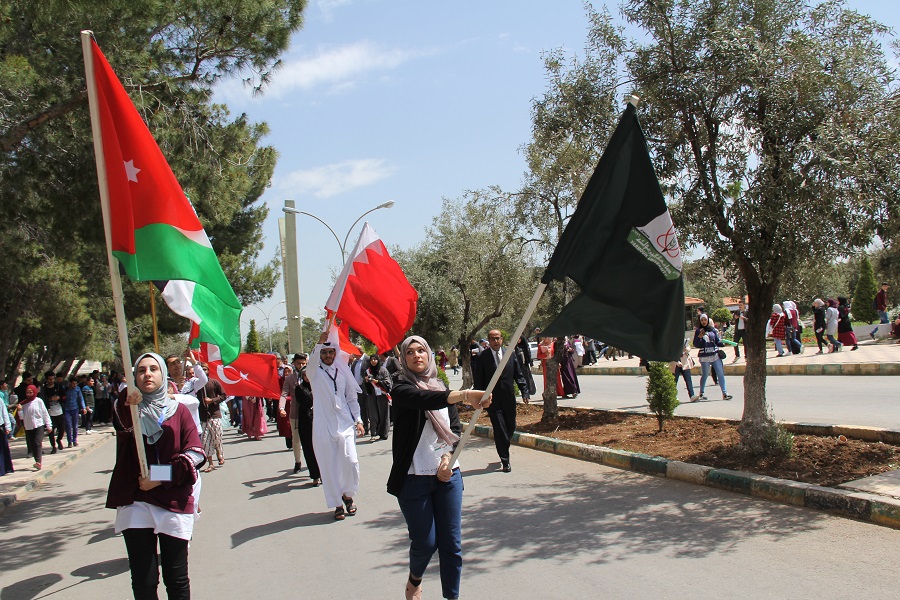
President of YU, Dr. Zeidan Kafafi, opened the "Arab and Foreign Communities National Heritage Exhibition", organized by the Student Welfare Department in the Deanship of Student Affairs, in cooperation with international students' club. The exhibition, which was opened in the presence of the Indonesian ambassador in Amman, had participants from 17 communities of international students studying at YU, and lasted for three days.
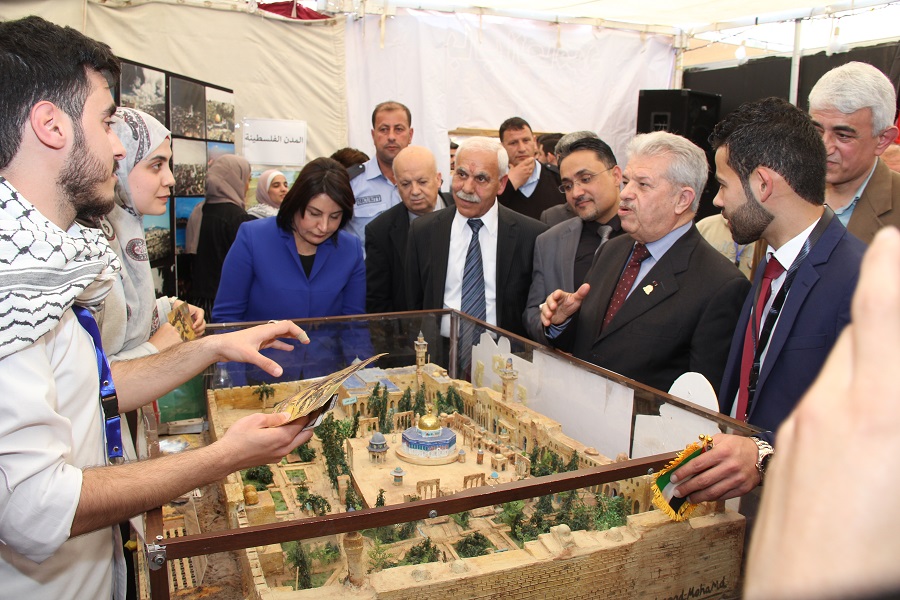
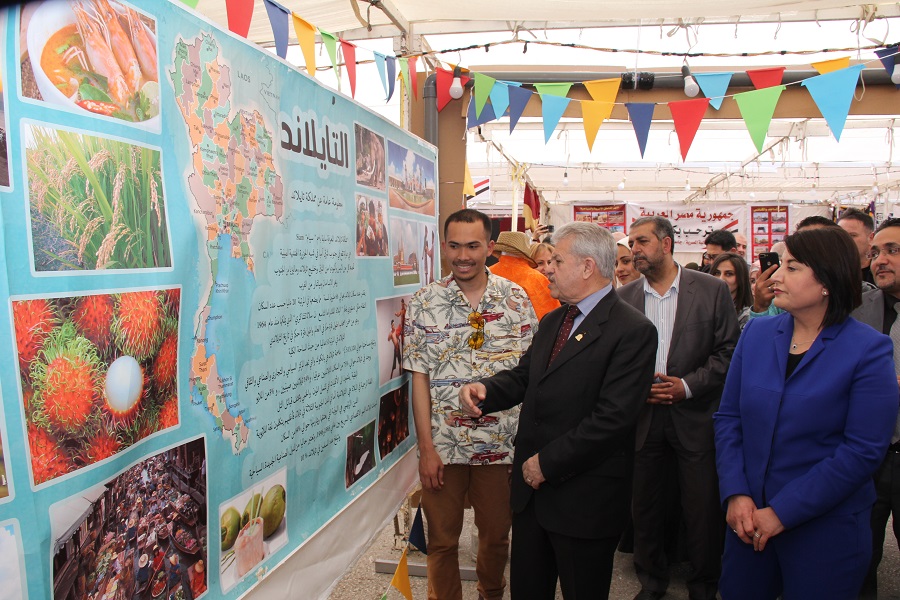
While touring the exhibition's sections, Kafafi stressed the importance of such events in familiarizing students with cultural diversities, and in integrating international students into university.
Kafafi added that the administration of YU takes good care of international students and is keen to provide them with whatever needed to refine their personalities, develop their skills, and introduce their cultural diversity, praising the active role of the Deanship of Students Affairs in organizing the event.
For her part, the dean of students' affairs, Dr. Amal Nseir, said that organizing such events aims at familiarizing YU students with the traditions of the participating countries, thus providing them with opportunities to learn about their culture, touristic sights and history.
The president of international Students' Club, Yaqoub Al-Rifai from Kuwait, praised the efforts of YU in providing international students with the academic atmosphere, as well as integrating them with the students’ body.
The students' communities that participated in the exhibition represented the countries of Turkey, Thailand, Indonesia, Syria, Singapore, America, Egypt, Bahrain, Oman, Yemen, Iraq, Kuwait, Malaysia, China, Korea, Saudi Arabia, and Palestine. The exhibition included posters, photographs of tourist and religious places, popular cuisines, traditional and folk costumes, ceramics, silverware, straw works, brass, and popular perfumes and incense from Arab countries. It also included designs of cultural monuments, cultural and art performances and folkloric songs.
The opening of the exhibition was attended by deans and officials at the university and a crowd of university students.
It is worth noting that international students account for 10% of Yarmouk students, representing 43 Arab and foreign nationalities.

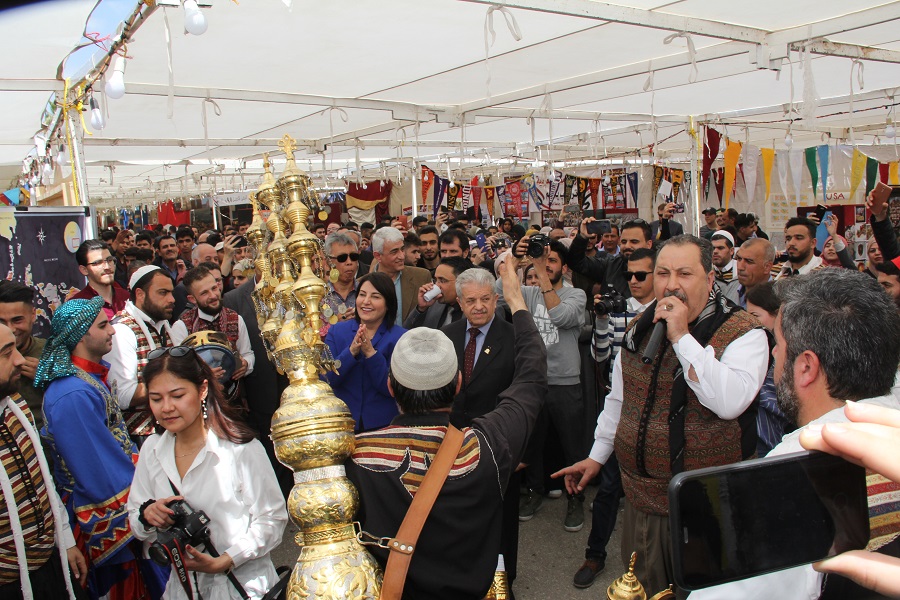

The president of YU, Dr. Zeidan Kafafi, and the international manager for the Middle East at the French University of Sciences-Po, Lea Albrieux, discussed possible means and ways of academic cooperation.
At the beginning of the meeting, Kafafi stressed the keenness of YU to cooperate with prestigious international universities, which enhances educational processes, and provides training and research opportunities for both students and staff. He also pointed out that YU is one of the first Jordanian universities to participate in Erasmus+ student exchange programs, which opened doors for scientific and research cooperation with various European universities.
Kafafi further pointed to framing cooperation with Sciences Po in social sciences through signing a memorandum of understanding within the Erasmus+ program to benefit from exchange programs, as well as sending students from Yarmouk to seek postgraduate studies there, confirming the readiness of YU to receive students from Sciences Po to learn Arabic at the Languages Center.
Albrieux, for her part, expressed Sciences Po’s willingness to cooperate with YU, proceeding from their philosophy to expand cooperation with various Middle Eastern countries through students and staff exchange programs. She also gave an introduction about Sciences Po in which she stated that the university is a pioneer in social sciences, and ranked fourth for politics and international Studies in QS, adding that it has cooperated with more than 400 universities around the world, and uses French and English as languages of instruction to allow more students from Middle East countries to enroll.
The meeting was attended by vice president, Dr. Ahmed Al Ajlouni, dean of the faculty of Arts, Dr. Mohammad Bani Domi, director of International Relations and Projects, Dr. Mowaffaq Al-Otoom, director of Public Relations and Media, Mr. Mukhlis Al-Ibbini, and Dr. Reham Jaradat from the Department of Modern Languages.
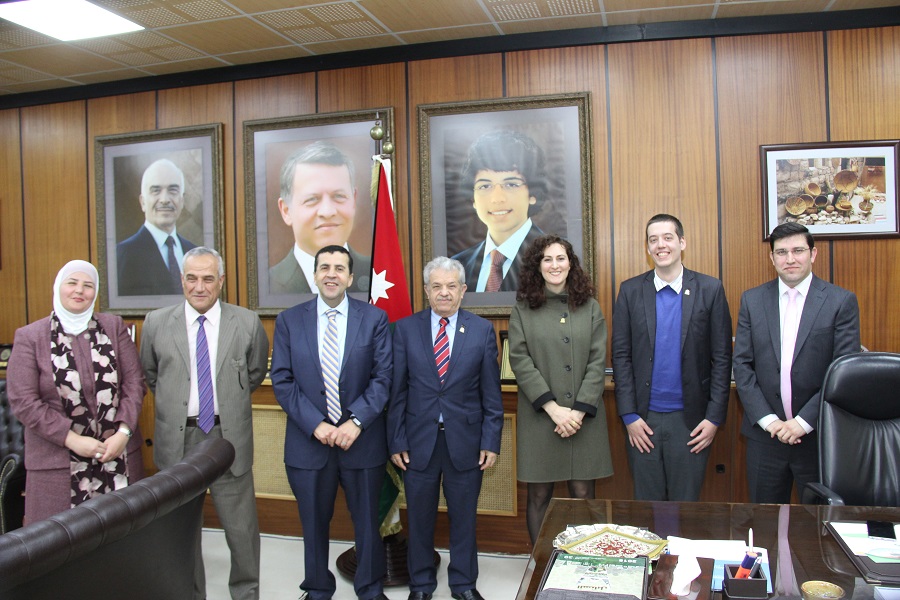

The president of YU, Dr. Zeidan Kafafi, met Dr. Mark Johnson from the College of Education at the University of Wisconsin-Madison, representative of the American Fulbright Program. Means and ways of cooperation between the two universities were discussed.
Kafafi pointed out that YU has academic agreements with various American universities and educational institutions, that include students and staff exchange programs. He also pointed out that Yarmouk was one of the first universities to join the Fulbright Program, and a key partner in educational exchange programs as well as students grants. He further stressed the need to activate these relationships and to invite faculty members from American universities to teach in the different departments of YU to enrich the teaching process and to share experiences.
Kafafi also stressed the need to strengthen cooperation with the University of Wisconsin for its distinguished academic reputation in various fields, especially in medicine and education, adding that Yarmouk has been a pioneer among local and regional universities in offering certain disciplines such as media and fine arts. He also pointed that YU aspires to offer an MA degree in Museum Studies at the Faculty of Archaeology and Anthropology, which will be the first at the kingdom.
Johnson, for his part, confirmed the U.S. Embassy’s keenness to strengthen cooperation between Jordanian and American universities through the Fulbright Program, and the keenness of the Fulbright program in Jordan to offer opportunities for academic cooperation between Yarmouk and various American universities in different fields to enhance educational processes at YU.
He further expressed the University of Wisconsin's readiness to cooperate with Yarmouk through students and staff exchange programs in disciplines of interest to both sides, stressing the need to provide students with English and communication skills necessary to pursue their postgraduate studies in American universities.
The meeting was attended by vice president, Dr. Fawwaz Al-Abed Al-Haq, dean of the Faculty of Archaeology and Anthropology, Dr. Hani Hayajneh, the director of international relations department, Dr. Mowaffaq Al-Otoom, and the director of public relations and media, Mr. Mukhlis Al-Ibbini.