The preparation of scientific competencies in various fields of knowledge, and the production of innovative scientific research aims to serve society by providing exemplary education in an intellectually stimulating university environment.
Jobs | Scholarships | Students | Staff | Alumni
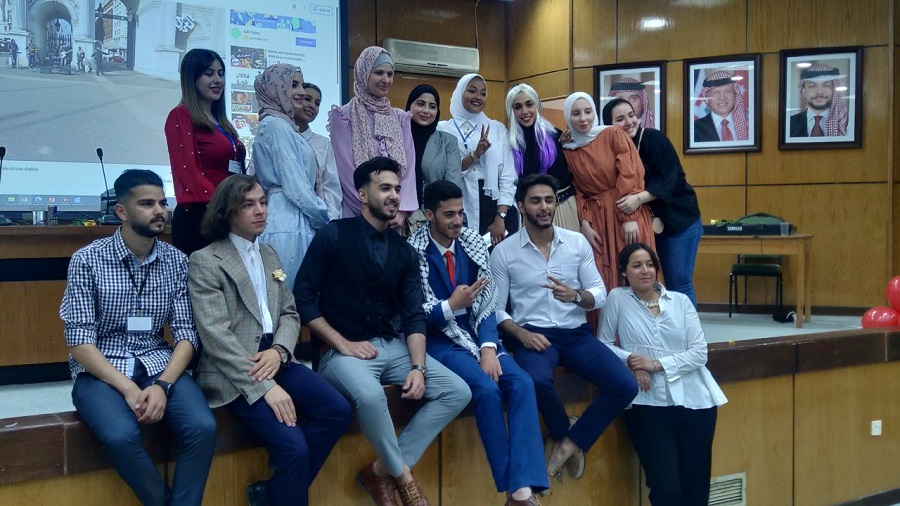
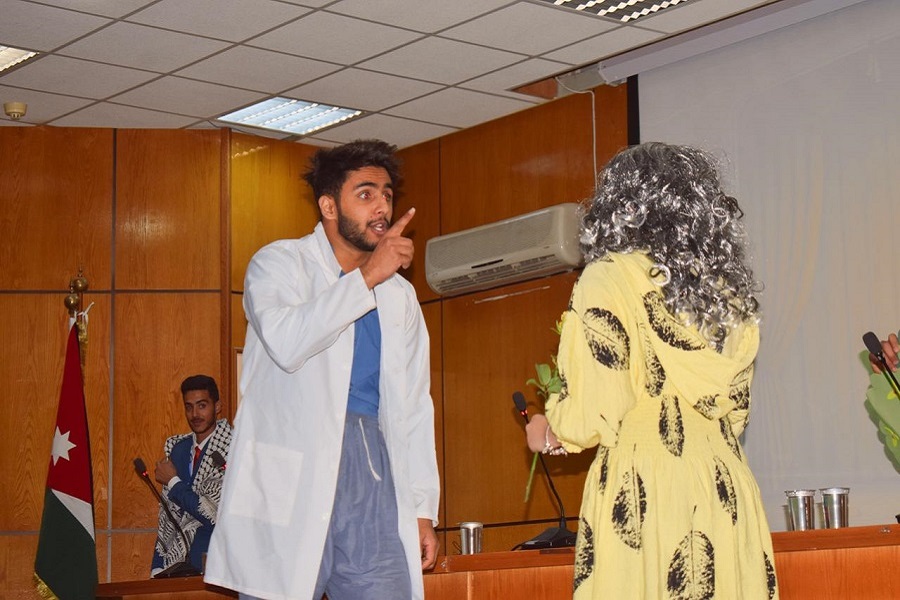
Supervised by Dr. Nada Al-Nasser, "A Doctor against his will” by Molière was performed by several students of the department of Modern Languages on the stage of Arar Amphitheater at the University. Explaining that the play is one of the French masterpieces of the seventeenth century, Al-Nasser acknowledged the efforts made by students to perform the play despite the difficulty of pronouncing and memorizing its diction, which reflects the distinguished academic level of students and their mastery of French. She also pointed out that the play belongs to the genre of satirical comedy and was performed for the first time in 1666 on the stage of the Royal Palace in France. Noteworthy is that the performance was attended by the head of the Drama Department at the Faculty of Fine Arts, Dr. Bilal Thiabat, several faculty members, and a crowd of students and their families.
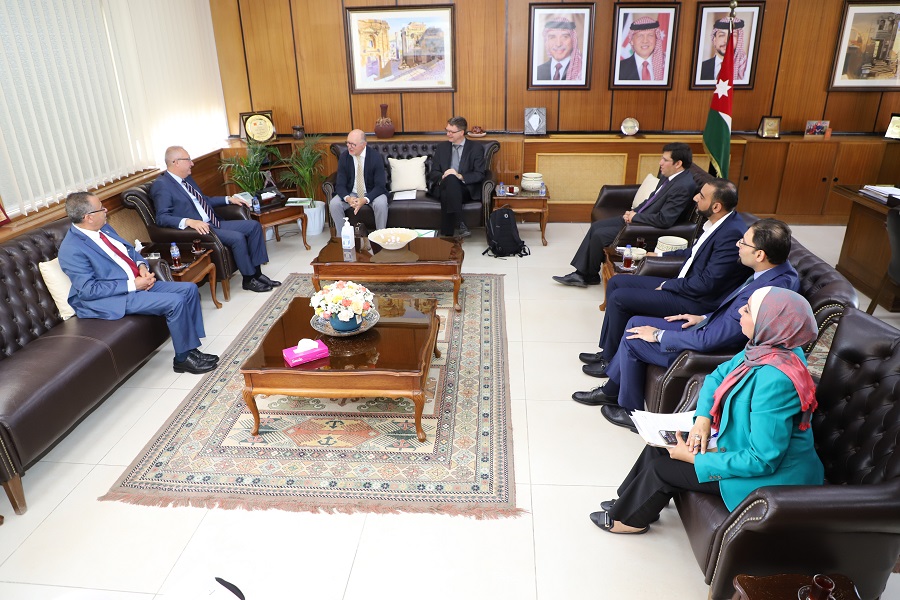
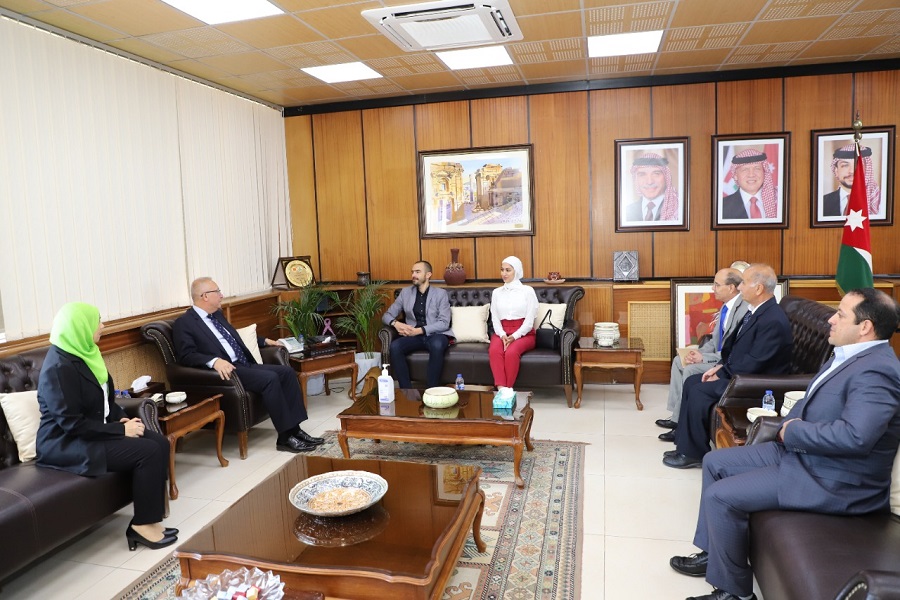
The President of Yarmouk University, Professor Islam Massad, met with the Director of GIZ’s branch of Vocational Education directed to the Labor Market, Higher Education, and Training, Wolfgang Friedberg, who was accompanied by Dr. Rainer Herbes from the German University of Bonn Rhein-Sieg, discussing ways to strengthen cooperation between the two parties. Massad expressed Yarmouk's pride in the distinguished academic and research cooperation relations it has with various German institutions and universities, stressing its keenness to consolidate cooperation with (GIZ) through the implementation of more scientific and research projects that positively reflect on the progress of the educational process. He then pointed out that al-Hijjawi Faculty is keen to update and develop its study plans in line with the needs of the internal and external labor market, acknowledging the outstanding scientific level of the (YU-RL) project implemented by al-Hijjawi Faculty in partnership with the German University of Bonn Rhein-Sieg, which aims at designing and developing methods and tools for teaching practical remote laboratories.
In return, Friedberg reviewed the emergence of GIZ as a service provider in the field of international cooperation for sustainable development, where the Agency's office in Jordan provides services in the main fields of education, economic development, employment promotion, and water and the environment. He also stressed the agency's keenness to strengthen cooperation with Yarmouk due to its researchers’ competence and ability to implement outstanding scientific projects and research in various fields.
The President of Yarmouk University, Professor Islam Massad, met with the Director of the Office of the German Academic Exchange Service (DAAD) in Jordan, Benjamin Schmäling, to discuss ways to enhance cooperation between the two sides in various fields of scientific exchange at the level of students and faculty members. Massad focused on the importance of strengthening relations of scientific, academic, and cultural cooperation with various educational institutions, as this contributes to exchanging information and experiences, and strengthening and acquiring the necessary skills needed to qualify and prepare young people with a high degree of responsibility and scientific excellence, as evident in the plan of the University’s Language Center to offer a package of foreign language courses, including the German language, for students.
In return, Schmäling praised the distinguished level of Yarmouk University, pointing out that Yarmouk is one of the important partners of DAAD in various fields of cooperation, pointing to the DAAD’s readiness to support the university in a way that contributes to the development and modernization of the university as well as the dissemination of the German language and culture in the region. However, the meeting was attended by the Dean of the Faculty of Arts at the University, Professor Musa Rababaa, the head of the Department of Modern Languages at the university, Professor Hussein Rahil, and the director of the Language Center, Professor Lamia Hammad.
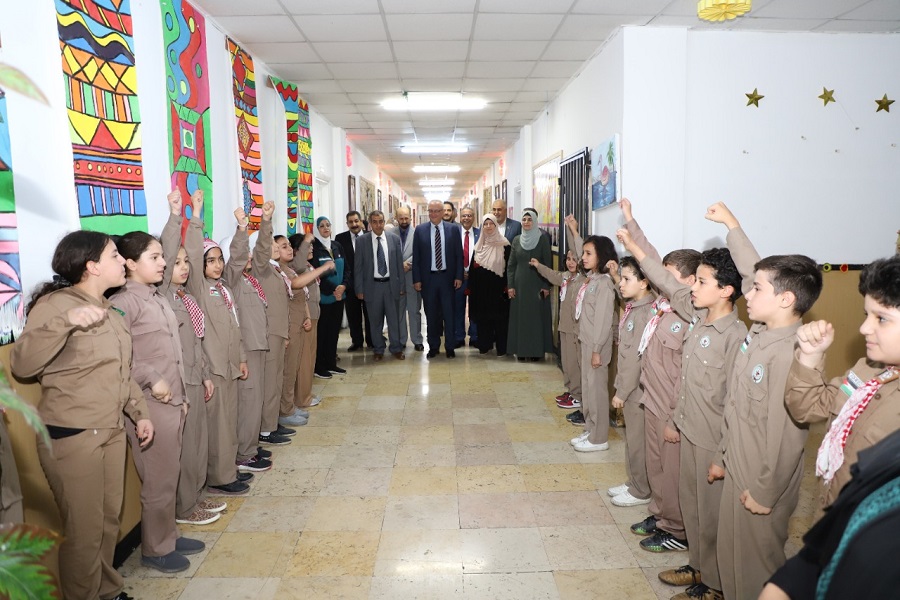
As part of Yarmouk University’s celebrations of the Kingdom’s 76th Independence Day, the President of the University, Professor Islam Massad, sponsored the opening of a special art exhibition for students of Yarmouk University Model School, which was organized by students and their supervisor teacher Ibtisam Yassin. Massad toured the exhibition, praising its creativity, which reflected a delicate artistic sense. He further stressed the importance of enhancing, developing, and building on the technical skills of such students through refining and directing their skills in a sound technical educational framework. He also praised the efforts of the Model School represented by its principal as well as its teaching and administrative staff, for encouraging students and motivating them to participate in various extracurricular activities.
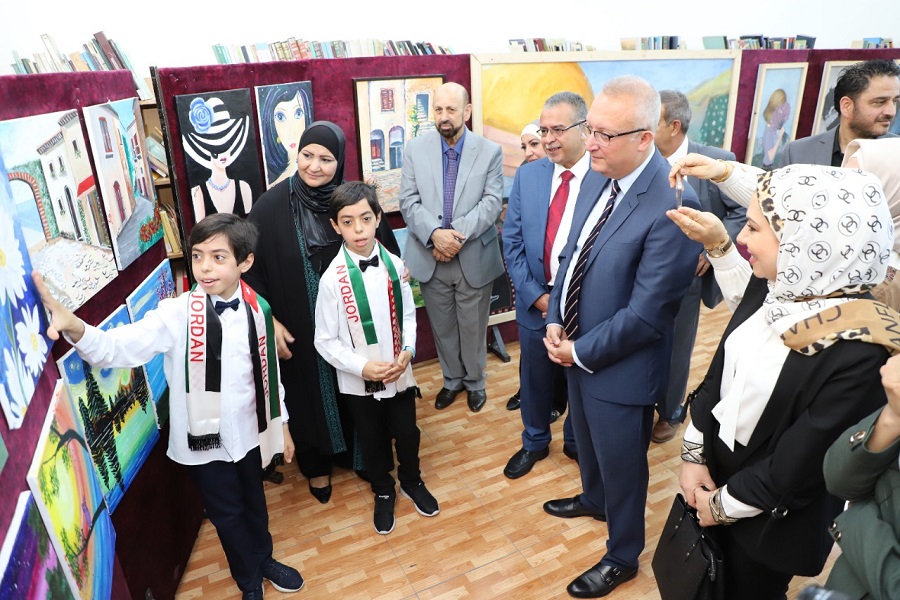
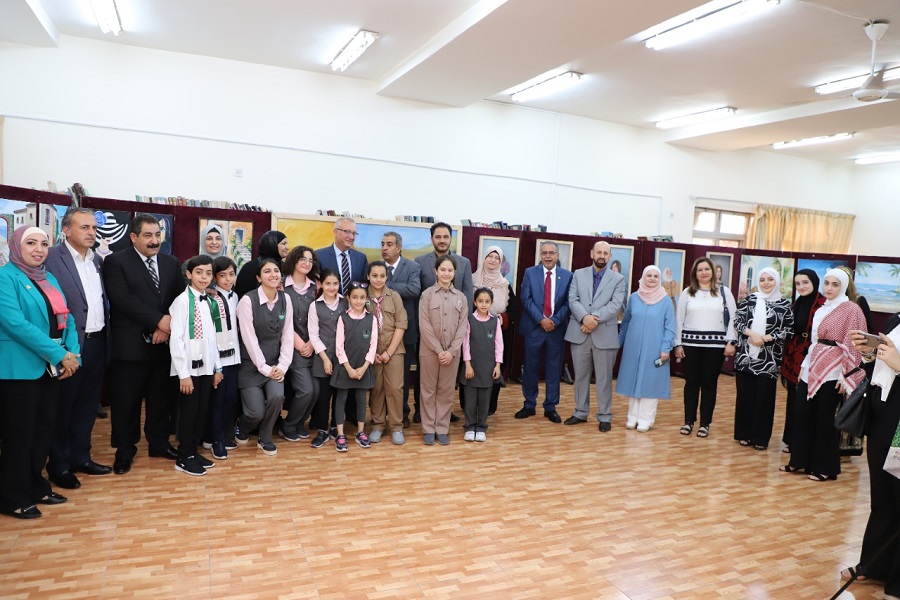
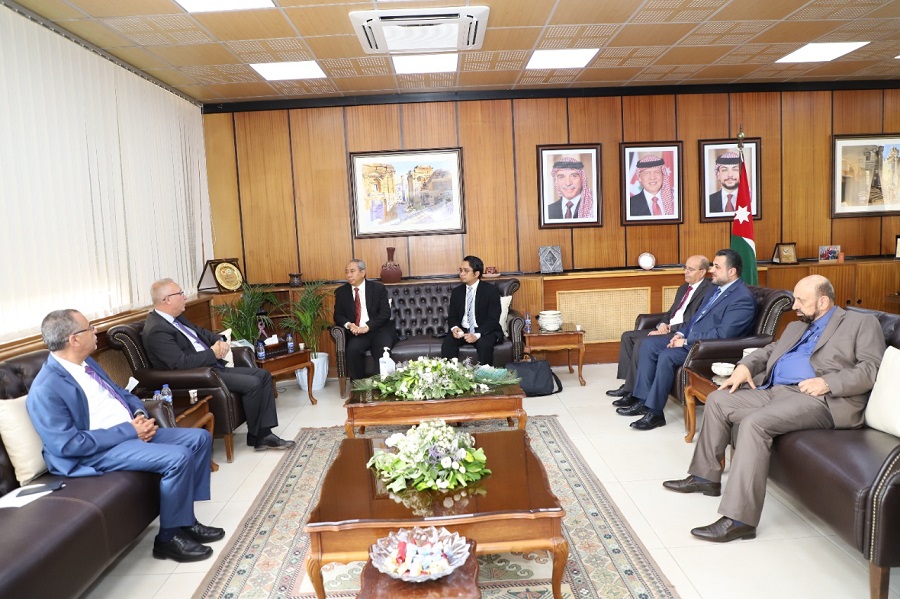
The President of Yarmouk University, Professor Islam Massad, met with the Indonesian Ambassador in Amman, Dr. Ade Padmo Sarwono , to discuss ways of enhancing academic and cultural cooperation between Yarmouk and Indonesian educational institutions. Massad said that Yarmouk takes much great care of its international students, stating that Yarmouk hosts 119 students from Indonesia. He then affirmed the University’s readiness to receive more Indonesian students to complete their studies in various disciplines offered by the university. In return, Sarwono praised the prestigious scientific reputation of Yarmouk University and the distinguished level of its Indonesian graduates who proved their experience and superiority in Indonesia. He further praised the exhibition of the Arab and international communities at the University, as such events facilitate the emergence of Indonesian students with other students and their customs, traditions and cultures.
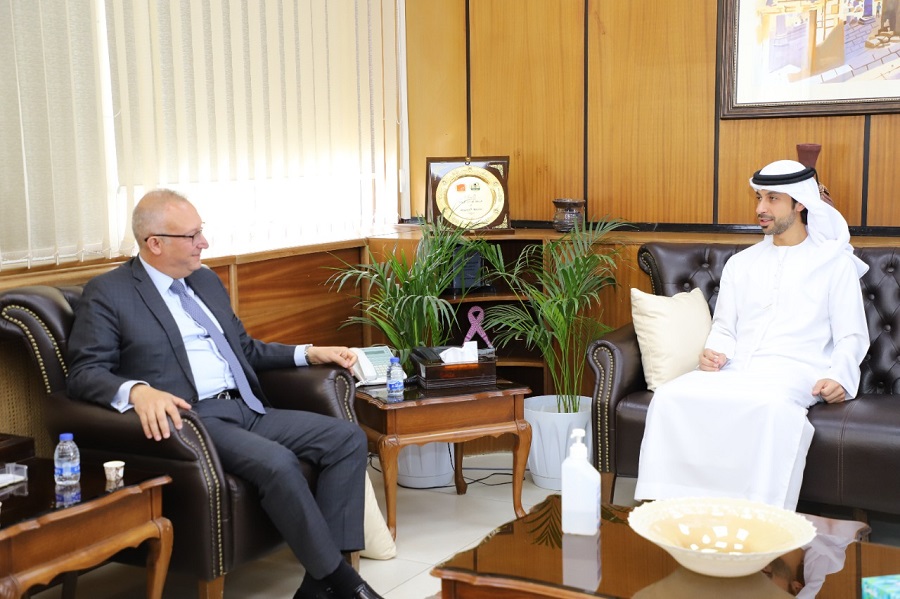
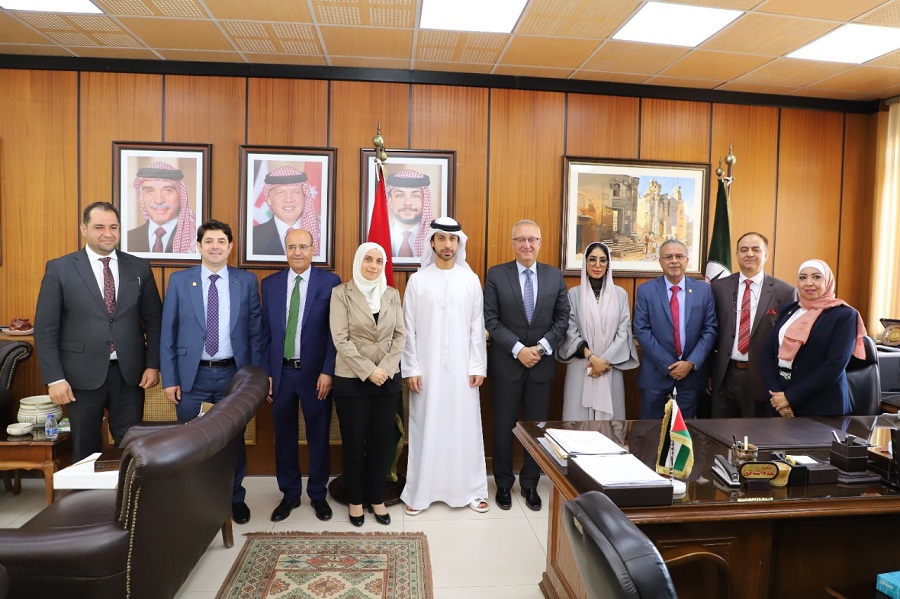
The President of Yarmouk University, Professor Islam Massad, met with the Emirati Attaché of Education, and Technology Sciences, Sheikh Dr. Ammar Al-Mu’alla, and the accompanying delegation to discuss ways of enhancing scientific and academic cooperation between Yarmouk and Emirati universities in areas of common interest. During the meeting, Massad expressed the keenness of Yarmouk University to meet the aspirations of Jordanian and Arab youth by keeping pace with developments and modernization in various academic programs in line with the requirements of the labor market. He then pointed out that the University started implementing a set of procedures and plans to provide students with the basic skills that refine their personality and open up new horizons for them in the labor market. He also mentioned that Yarmouk University pays careful attention to its international students and their involvement in several cultural activities and events.
For his part, Al-Mu’alla praised the distinguished level of Yarmouk University and the keenness of the UAE Ministry of Education to cooperate with Yarmouk University in the field of establishing joint academic and professional programs, exchanging experiences and scientific visits for faculty members and students, pointing to the keenness of the UAE Education and Technology Attaché Office in Amman to be acquainted with all novel scientific and academic specializations and programs in Jordanian universities.
In response, the Vice President of Yarmouk University for Academic Affairs, Professor Muwaffaq Alomoush, gave a briefing about the faculties of the University and their distinguished and unique specializations and degrees, pointing out that Yarmouk University is a comprehensive institute that works to develop specific disciplines and be among the academic pioneers of the region.
During his visit to the university, the Attaché accompanied by the delegation, toured the University campus, where he visited the business incubators at al-Hijjawi Faculty of Engineering Technology and the Semitic and Oriental Languages Department at the University's Faculty of Arts.
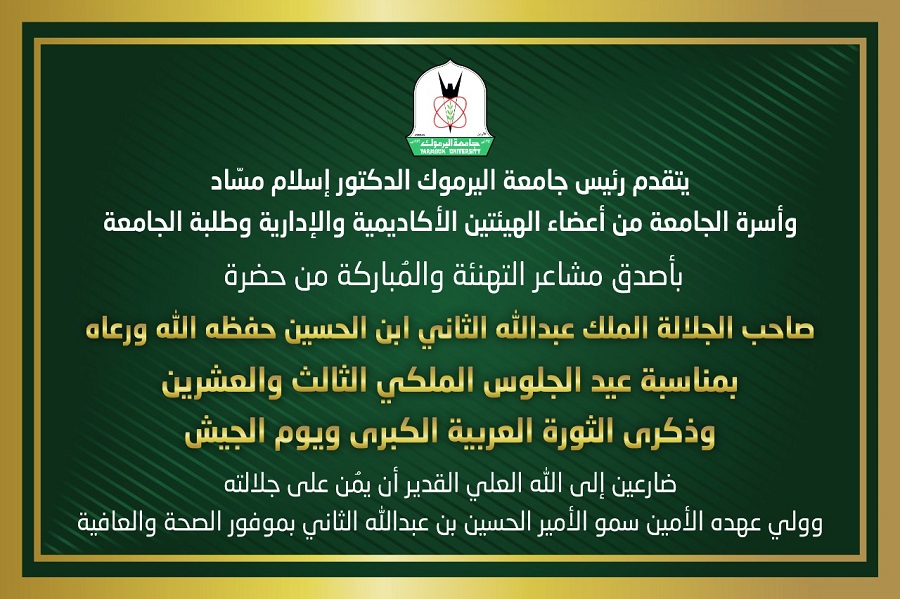
The President of Yarmouk University, Prof. Islam Massad, its faculty and administrative staff, and its students are honored to express their sincere congratulations to his Majesty King Abdullah II on the occasion of the 23th Royal Sitting, the army day, and the anniversary of the Great Arab Revolution. Acknowledging the significance of these festivals, Yarmouk community asks Allah to preserve His Majesty's health and wellness, and to perpetuate the grace of the Hashemite leadership in Jordan.
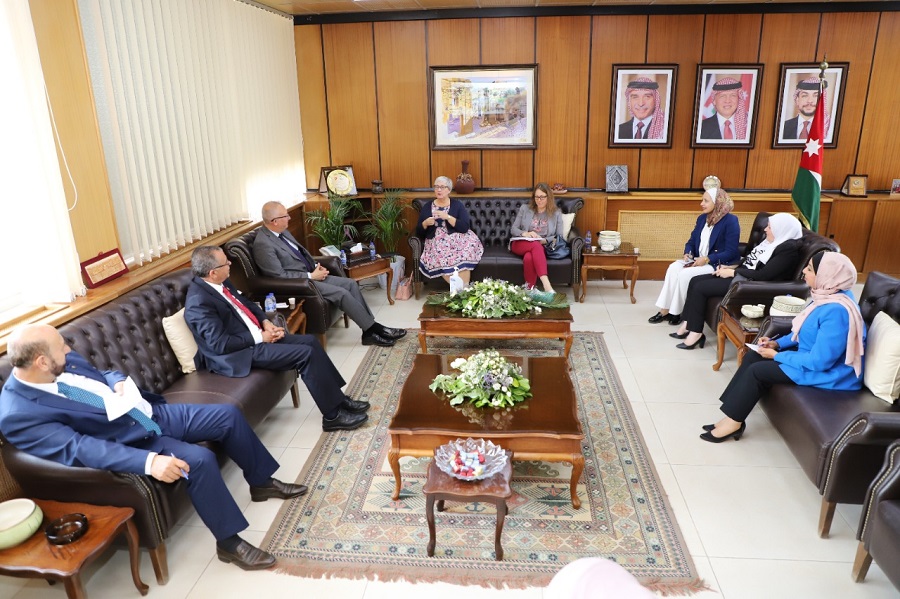
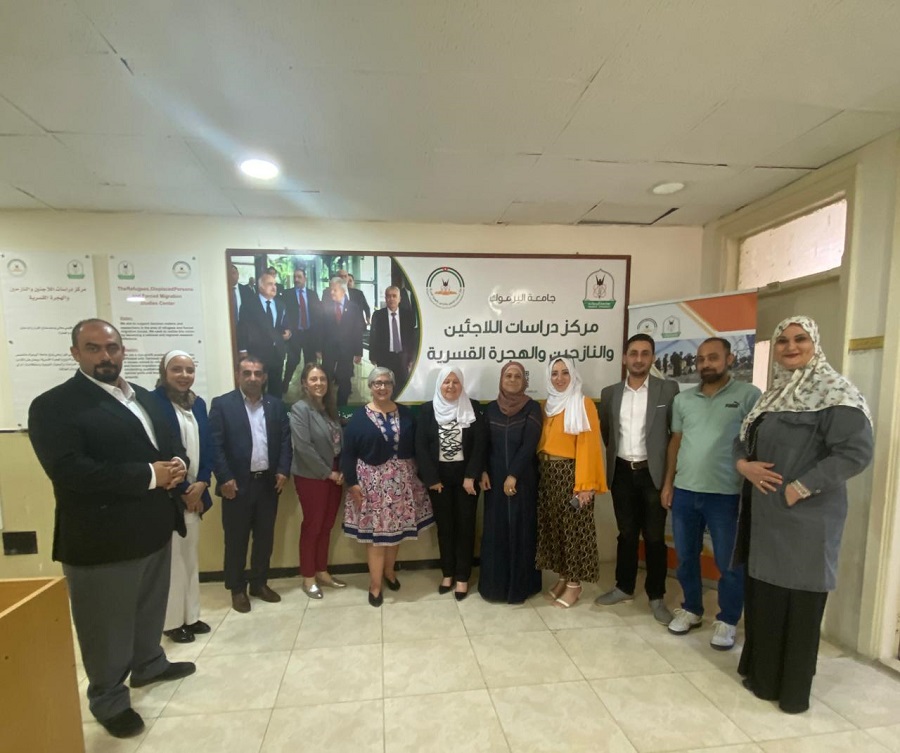
The President of Yarmouk University, Professor Islam Massad, met the Canadian Ambassador to Amman, Donica Pottie, who was accompanied by the Director of the Immigration Program at the Embassy, Sarah Erlichman, to discuss ways of enhancing cooperation between the two parties. At the beginning of the meeting, Massad reviewed the emergence of Yarmouk and its faculties as well as the specializations it offers expressing the University’s keenness to develop more specializations like nursing. He then praised the permanent cooperation between Yarmouk and the Canadian Embassy in Amman, as the Canadian government had already provided support for many projects implemented by Yarmouk University, such as Deir Alla Station for Archaeological Studies and the leading female academics network. He also pointed out that the Refugees, Displaced Persons and Forced Migration Studies at the University is in the process of launching a new strategy to strengthen cooperation with international organizations and bodies, which provides an opportunity for faculty members, researchers and students at the university to conduct studies and research related to refugees and migration. For her part, Pottie pointed out that the Canadian government supports a program of cooperation between Canadian universities and several universities in the world, pointing that Yarmouk may benefit from the Expo program for universities 2022 in this field.
Pottie then visited the Refugees, Displaced Persons and Forced Migration Studies Center, where she listened to a detailed explanation from the Director of the Center, Dr. Reem Al-Kharouf, about the establishment of the center, its objectives, activities, and strategic plan. She further met the staff and volunteers of the center to have a look at the mechanisms of the workflow and ways to serve refugees.
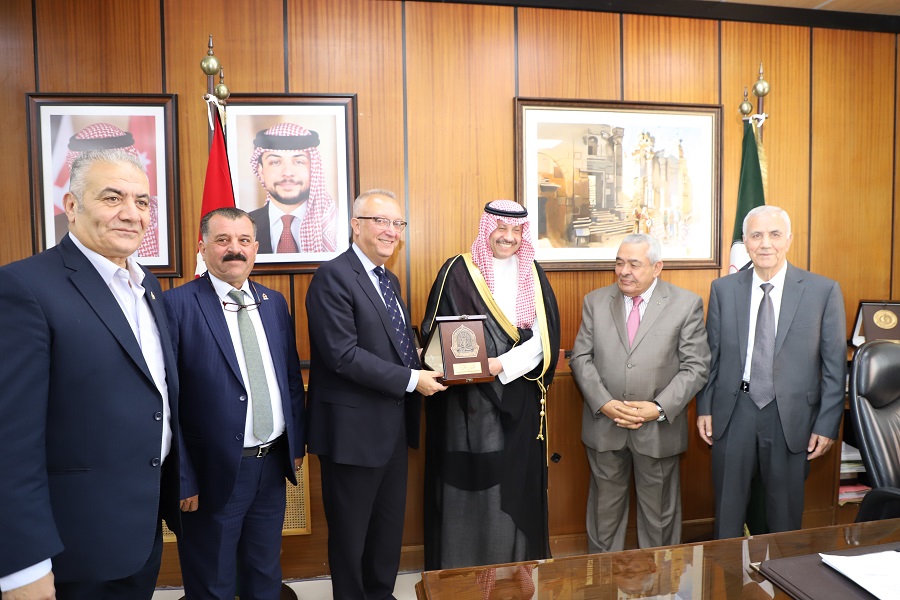
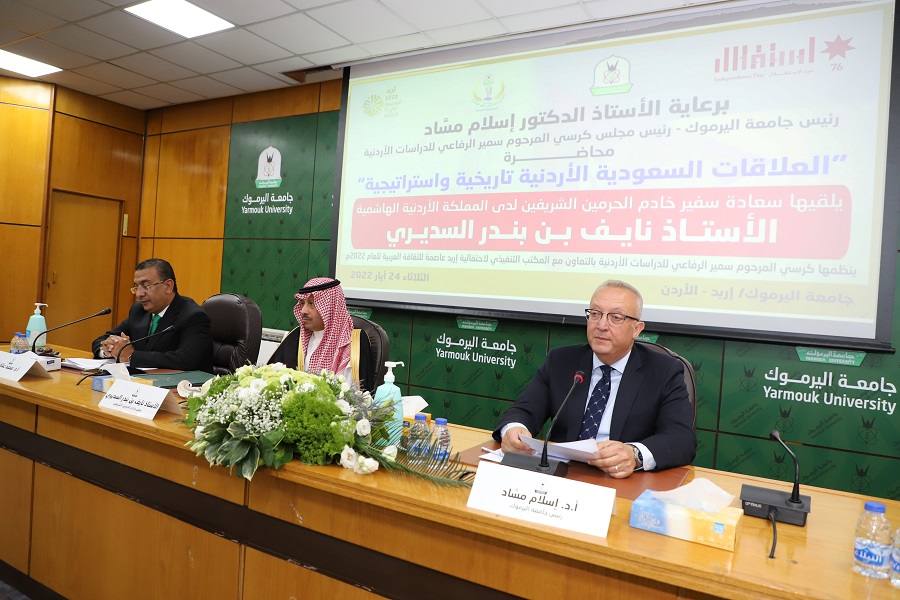
Sponsoring a lecture entitled as “The Saudi-Jordanian Relations: Historical and Strategic” and delivered by the Saudi Ambassador to Jordan, Nayef bin Bandar Al-Sudairy, the President of Yarmouk University, Professor Islam Massad, said that the Saudi-Jordanian relations are always characterized by depth, firmness, and stability, and that the relations between the two countries led by His Majesty King Abdullah II Ibn Al-Hussein and the Custodian of the Two Holy Mosques King Salman bin Abdulaziz Al Saud, have always taken a distinguished and well-established path, which empowers and guarantees the harmony between both kingdoms. He then emphasized that the relationship between the two countries represent the best example and finest model of cooperation, as it crystallizes the permanent meeting of goals, objectives, and ambitions, acknowledging that the Kingdom of Saudi Arabia has never hesitated to open its doors wide to host distinguished Jordanian competencies, including doctors, teachers, economists, businessmen, and professionals, and that the Saudi Fund for Development supports several projects in Jordan.
For his part and through his lecture, the Ambassador explained that the Saudi-Jordanian relations are historical and strategic, considering their communal roots, history, identity, kinship, challenges, common interests, directions, and destiny. He emphasized that the relations between the two kingdoms are rooted and authentic since the era of the founders of the two countries, which explains why both countries have the same identity, history, values, approaches, policies, and supreme interests. Al-Sudairy then pointed to the important role of researchers and academics in studying, documenting, and consolidating such communal features scientifically and objectively, as this contributes to prosperity of both kingdoms and peoples.
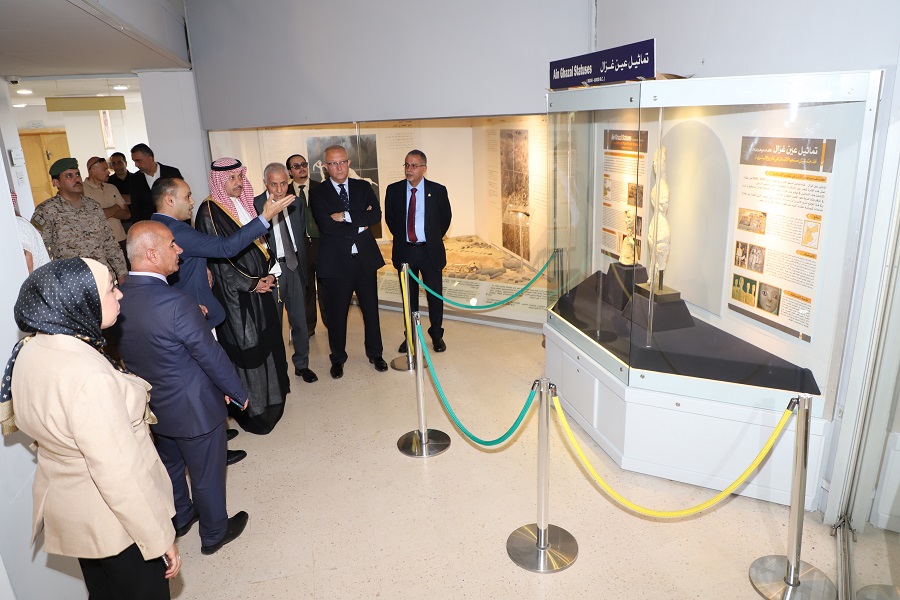
Notably, the Ambassador’s lecture was organized by Samir Al-Rifai Chair for Jordanian Studies in cooperation with the Executive Office of the Celebration of Irbid as the Capital of Arab Culture, and it was attended by former Prime Minister Dr. Abdul Raouf al-Rawabdeh, several members of the university’s board of trustees, the university’s vice presidents, a number of Irbid governorate deputies, former and current university presidents of Jordanian universities in the north, several deans of faculties and faculty members, a crowd of Jordanian and Saudi students at the university, and a number of officials at the university and embassy. Moreover, it is notable that after the lecture, the Ambassador accompanied by the president of the university and a number of officials toured the university campus, where they visited Prince Al-Hussein bin Abdullah II Building (classroom complex), which is one of the projects sponsored by the Saudi Fund for Development. They also visited the Jordanian Heritage Museum at the university, Samir Al-Rifai Chair for Jordanian Studies, Queen Rania Center for Jordanian Studies and Community Service, and some other buildings.